Sony Bravia Ex52 40 Manual
The Good Innovative automatic power-off feature saves energy; extremely energy-efficient; matte screen works well in brighter rooms; relatively accurate color; solid Internet services including Netflix, Amazon Video, and numerous niche videos; snappy menu system. The Bad Reproduces lighter black levels; darker areas tinged blue; cannot adjust dejudder processing much; less-even screen uniformity; Netflix image quality worse than on other streaming devices. The Bottom Line Sony's midrange edge-lit LED-based LCD is nothing special from an image quality standpoint, but its Internet video and eco-friendliness will attract a lot of buyers. Visit for details. The Sony KDL-EX700 is the second edge-lit LED-based LCD we've tested from Sony this year.
If you read the 's review, you will notice more similarities than differences between the two. The price disparity-of $400 between the two series' 46-inch models-gets you improved styling, Wi-Fi networking, and a couple of other minor niceties on the NX800; however, for some reason you lose the innovative 'presence sensor.' That feature turns the EX700's picture off automatically when you leave the room, and it can really lower power use if you're prone to leaving the TV on. Even without the sensor, the EX700 sips as little power as any TV we've tested-although we expect other LED models we review this year to post similar results. Careful comparison shoppers might be surprised to learn the two Sonys have nearly the same picture quality. The major performance-related difference is that the EX700 has a matte screen, while the monolithic exterior of the NX800 apparently calls for gloss- in a bright room, we preferred the matte finish.
The EX700's picture won't wow anyone looking for a home theater centerpiece, but the TV earns the practicality nod over its more-expensive brother for buyers who still want Internet video and superb energy efficiency. We performed a hands-on evaluation of the, but his review also applies to the other sizes in the series: the, the, the and the.
All sizes share identical specifications, so they should deliver very similar picture quality. Design Editors' note: Many of the Design and Features elements are identical between the KDL-EX700 and the we reviewed earlier, so readers of the earlier review may experience some deja vu when reading the same sections below. Sony applied the standard 'step-up' philosophy when it designed the exteriors of the EX700 and the more-expensive NX800.
While the latter gets Sony's so-called monolithic touches-a highly integrated look featuring a single pane of glass, a narrow gap between the stand and panel and uninterrupted swaths of glossy black-the EX700 looks more traditional. The EX700's screen and frame are clearly separate, the latter glossy black on three sides and brushed dark gray strip along the bottom with no major interruptions. While we liked the design of the NX800 better, the EX700's design is nice as well. The swivel stand has a glossy black finish.
We also liked the EX700's remote control, albeit not quite as much as the NX800's slicker clicker. The EX700's remote loses the nice, flush plastic keys that the NX800 has in favor of the standard raised rubber variety; it also losing the backlighting feature, and you can't command other gear with it via infrared. However, the remotes excellent button arrangement and nice concave shape stay intact, as does that weird power button on the back of the remote and the stealthy sliding battery compartment (yes, we just praised a battery compartment). Netflix is the most important among the EX700's numerous video services, and gets a prominent place In the menu system. Sony didn't touch its menu system on the EX700, and that's generally a good thing. The XMB interface, inspired by the company's game consoles, does a good job of surfacing the TV's many Internet services, inputs, and miscellaneous doo-dads and arranging them in a logical fashion. While we'd love to see more customization options and less clutter (how about the capability to 'hide' unwanted interactive services or even entire verticals, such as the TV channels section, which is useless for cable box users), the snappy navigation-the best we've seen on any TV, and reminiscent of the PS3-makes up for a lot.
A handy Favorites menu lets you manually add services and other items for easier access. We also appreciate that Sony included ways to avoid having to navigate the big XMB, from direct-access remote keys to a Favorites section that remembers often-accessed inputs-you can also manually add items, like Netflix-to the context-sensitive Options section with quick access to scene modes, MotionFlow settings, and Netflix options. Features Sony is using the same kind of edge-lit LED scheme to illuminate the EX700's screen as many other TV makers are using this year. Aside from its thinness, another major advantage of doing away with traditional in favor of LEDs is improved.
On the other hand, the choice of an, as found in Sony's high-end, generally results in some picture quality trade-offs. Internet features: The EX700 and NX800 share most of the same Internet features, with the notable exceptions being the latter lacks the Yahoo Widgets and built-in Wi-Fi found on the NX800. In 2009, Sony offered more Internet-connected services than any other TV maker, once it upgraded its compatible TVs to include Netflix; however, in 2010 it hasn't added anything new so far, such as the announced by Panasonic and LG, or the 'Apps' platforms touted by Samsung and Vizio. That will change in the upcoming weeks as the company launches QRIOCITY (pronounced 'curiosity'), an online movie service about which details are still scant. The Sony Netflix screen differs from standard issue sceen found on other TVs. Netflix is the main draw on the EX700, but according to our tests, it's video qualty fell significantly behind the quality we've seen from other Netflix devices-looking basically the same as the NX800 did.
We compared scenes from 'Lost,' one of the best-looking streaming titles in the Netflix library, and both Sony TVs looked equally soft, evincing more pixilation and artifacts than either the or the we used for comparison purposes did. It was as if the Sony was streaming Netflix video at a lower bit-rate, although we couldn't confirm that since, unlike most Netflix devices, the Sony interface gives no indication of what streaming quality you can expect. None of the other video services we tested, namely YouTube and Amazon Video on Demand, evinced unusual video quality issues. Minor video services abound on the EX700, including Sports Illustrated (no sports highlights-just swimsuit model clips when we checked), the minisode network, Blip.tv, Style.com, Howcast.com, and numerous video podcasts.
Aside from Amazon VOD, which looked excellent, and Netflix, the image quality for online media is generally bad-think non-HD YouTube-probably because in most cases the video content was designed for the Web. The free videos from CBS offer generally better quality, but don't expect anything close to, the network's official web portal for full TV episodes. Instead there's a confusing hodgepodge of clips and the rare full episode. ( Note: CNET Reviews is a division of CBS Interactive). We appreciate that Sony added a keyword search across the various minor services, but it would be much more useful if the search encompassed all of the video services, including YouTube, Amazon,and Netflix. Sony also offers a YouTube viewer. In terms of music services, Sony lacks the Pandora service found on Vudu-app-equipped sets such as the, but does offer Slacker as well as select content from NPR (no live radio streaming though).
The final piece of the interactive puzzle, and one we didn't test for this review, is the Sony's capability to stream photos, music, and video from networked PCs that are running compatible -compliant software, such as Windows Media Player 11. While this step-down Sony lacks the built-in Wi-Fi connection found on its more expensive brethren; however, you can add an optional USB dongle (model, $80 list) to connect to the Internet sans wires. Of course, you could also use a third-party Ethernet-to-wireless solution, such as a wireless bridge. Sony's MotionFlow dejudder mode has just two settings. The EX700 series provides the welcome capability to apply your settings to just the current input, or globally to all inputs.
The choice works with any of the three basic picture modes, Custom, Vivid or Standard, so you could conceivably have three different sets of picture settings for each of the inputs. There are also seven separate Scene modes, such as Game, Cinema and PC, that annoyingly aren't accessible via the main picture menu, and you can also apply settings from each of them to either the current input or all inputs. The result is a relatively confusing, albeit staggeringly customizable, array of settings. We're willing to bet folks who care deeply about having different settings for every input/situation will be OK with the complexity.
To make things simpler, pressing the Theater button on the remote engages the Cinema scene.
Summary of Sony KDL-40EX520 X-Reality Picture Engine Sony’s advanced image processing engine analyses each scene to give optimum colour and contrast. Enjoy great pictures, no matter the source Don’t let your enjoyment be hampered by low-resolution source videos.
With Sony’s exclusive X-Reality Engine, everything you watch – from HD movies to web videos – is analysed and selectively processed to give clean, clear, and lifelike pictures. While 3 unique noise reduction features work their magic prior to upscaling, Sony’s Intelligent Image Enhancer divides the signal into four characteristics – texture, outline, contrast, and colour – and optimises each one individually for more vivid and distinct pictures.
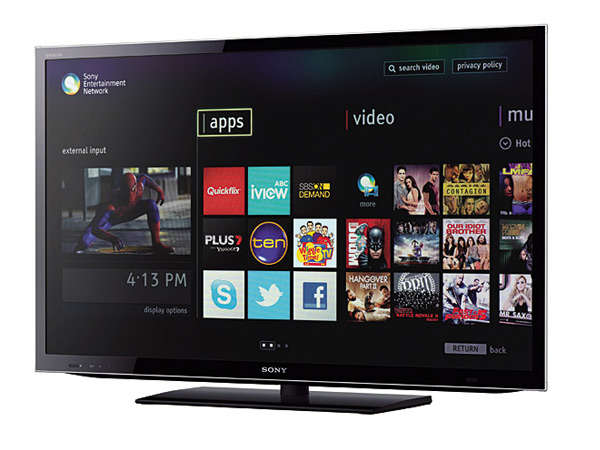
Settings/Home Menu
Remote Keyboard Connect your TV to your VAIO for seamless navigation. Easy TV control and text input Use your VAIO keyboard to control your television and input text quickly and conveniently. Full HD 1080 See every pixel in stunning clarity with Full HD. Enjoy HD content the way they were meant to be seen.
Parts Description
From HD broadcasts, HD satellite TV, HD cable, Blu-ray Disc movies, and HD home videos, you’ll catch each and every pixel in stunning clarity.
Comments are closed.