Canon Lbp 2900 Inkjet Printers Driver For Ubuntu And Other Linux Os

Welcome to LinuxQuestions.org, a friendly and active Linux Community. You are currently viewing LQ as a guest.
By joining our community you will have the ability to post topics, receive our newsletter, use the advanced search, subscribe to threads and access many other special features. Registration is quick, simple and absolutely free. Note that registered members see fewer ads, and ContentLink is completely disabled once you log in. Are you new to LinuxQuestions.org? Visit the following links: If you have any problems with the registration process or your account login, please. If you need to reset your password,.
Having a problem logging in? Please visit to clear all LQ-related cookies. Introduction to Linux - A Hands on Guide This guide was created as an overview of the Linux Operating System, geared toward new users as an exploration tour and getting started guide, with exercises at the end of each chapter. For more advanced trainees it can be a desktop reference, and a collection of the base knowledge needed to proceed with system and network administration. This book contains many real life examples derived from the author's experience as a Linux system and network administrator, trainer and consultant.
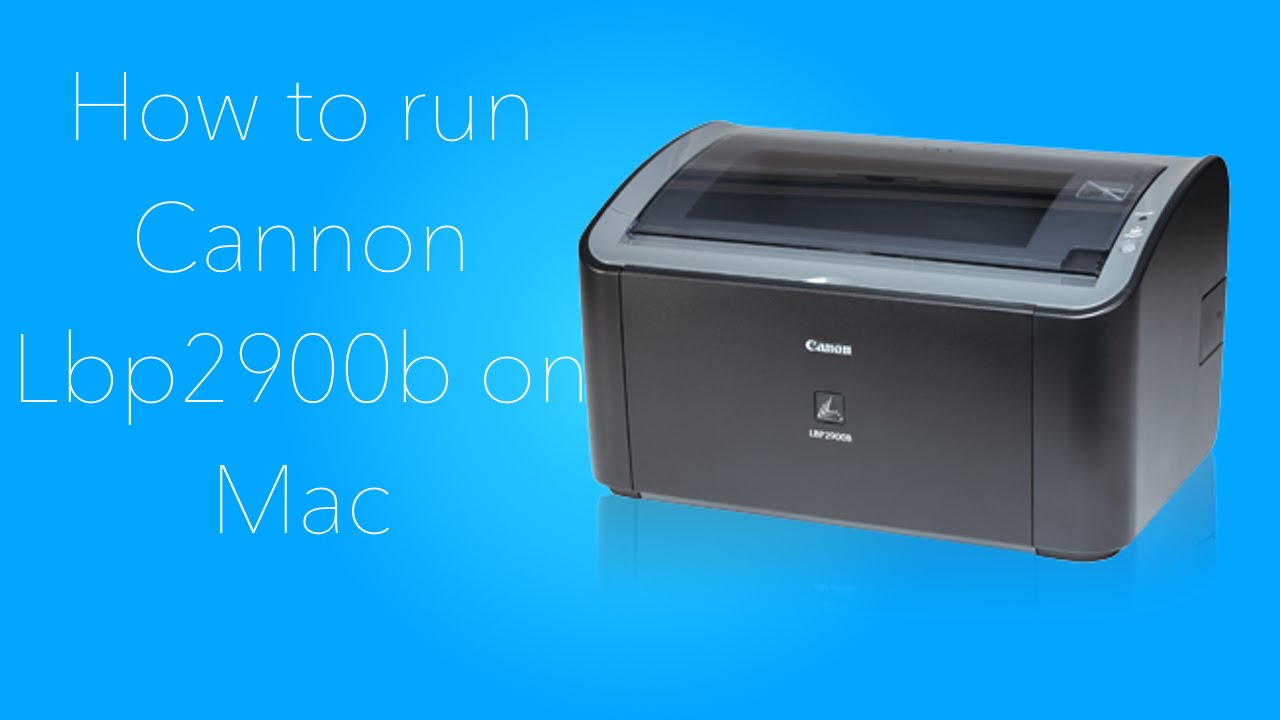
They hope these examples will help you to get a better understanding of the Linux system and that you feel encouraged to try out things on your own. To receive this Complete Guide absolutely free. I was installed Ubuntu 10.04, then now OpenSuse 11.2, but failed to make this Canon LB-2900 work with it! I followed every steps taken from the Canon Manual (comes with the downloaded driver) and guides from various Linux users from various webpages but still failed. I'm stucked here, and don't know what to do next. Is there any helps out there pls. KDE, GNOME & YAST was built for Linux to make it more user-friendly, easy to use & configure, but its nothing compared to Windows in terms of user-friendliness.
This printer stuff already took me a week to make it out while Windows will settle it in less than a minute! What these GUI use if we still have to use text-based command? Well.i know its an OSS but at least work-out something that will make users love it. Really need helps here. Quote: KDE, GNOME & YAST was built for Linux to make it more user-friendly, easy to use & configure, but its nothing compared to Windows in terms of user-friendliness.
This printer stuff already took me a week to make it out while Windows will settle it in less than a minute! The problem here is you have a printer that is not supported in linux. It is up to the manufacturer ( or should be ) to produce a working linux driver. Some manufacturers are better than others. There is a lesson to be learned, and that is research the product before you buy it.
I fought with Lexmark printer for a long time. Only a very few have linux drivers. I bought a laser printer, it is a Brother, and it is supported. The store did some checking for me before I bought it. If you want an ink jet, look at HP printers.
Almost all of their printers, and even some of their multi function machines have linux drivers. Uers friendly? I installed my printer through the cups gui.
You run it from any web browser. Enter in the location box, log in as root user, and follow the 'Add a Printer' button. Some distro like Ubuntu have created their own gui's to add printers. However none will work if there is no driver for the printer.
I hope this sheds some light on the problem. Start Linux after installation, and log in as 'root'. Install the common module for CUPS driver.
Install the CAPT printer driver module. Restart CUPS.
# sudo /etc/init.d/cupsys restart 5. Register the printer (PPD) with the print spooler.
# /usr/sbin/lpadmin -p LBP2900 -p CNCUPSLBP2900CAPTK.ppd -v ccp:/var/ccpd/fifo0 -E 6. Register the printer in the ccpd daemon setup file. Sudo /usr/sbin/ccpdadmin -p LBP2900 -o /dev/usb/lp0 7.
Start ccpd daemon. # sudo /etc/init.d/ccpd start 8. Start ccpd automatically Log in as 'root' and add the '/etc/init.d/ccpd start' command to the /etc/rc.local file. I CAN'T FIND THAT /etc/rc.local FILE. Quote: locate rc.local /etc/rc.local /etc/rc.d/rc.local /etc/rc.d/rc.local /home/cliff/etc/rc.local /home/cliff/etc/rc.d/rc.local /home/cliff/etc/rc.d/rc.local The second line of output is the file to edit. Anything in my /home directory is a backup ( I back things up ). The first line is a symlink to the second line, the real file.
How did I know that? I went to the directory, /etc and ran a command 'file rc.local' and the system told me it is a symlink to the real file in /etc/rc.d/ If the file does not exist on your system, you can create it with an editor. On most system rc.local is a script file that gets executed during the boot process. It is intended for the user to add things the user need running after the system boots. Something like the autoecec.bat files we used to use on dos systems.
Most distros supply a file with little more than a comment in the file to tell the user what can be added. The location of the file may vary from distro to distro.
Hope this helps. To find any file on the system, as root ( or sudo ) run the command 'updatedb' ( without the quotes ). This command may take a some time to complete the first time. It builds a data base of all files on the system. To find a file type 'locate rc.local' If the file exists, the system will return the full path and file name of all matches on the system.
In this case you might get 2 or 3 lines of output. Here is what it looked like on my system.
Jan 23, 2013. Cool Edit Pro free download. Get the latest version now. Advanced multi track sound editing program for Windows. Jan 13, 2014 - 3 min - Uploaded by -ElianHD-Descargar e Instalar Cool Edit Pro 2.1 Full con Crack| 100% real no feik - Duration: 4:49. Aug 26, 2012 - 3 min - Uploaded by kamilo ramirezCOOL EDIT PRO 2.1 COMPLETO + CRACK PT/EN 2017 - 2018 - Duration: 2:11. Cool edit pro free.
The second line of output is the file to edit. Anything in my /home directory is a backup ( I back things up ).
The first line is a symlink to the second line, the real file. How did I know that? I went to the directory, /etc and ran a command 'file rc.local' and the system told me it is a symlink to the real file in /etc/rc.d/ If the file does not exist on your system, you can create it with an editor. On most system rc.local is a script file that gets executed during the boot process. It is intended for the user to add things the user need running after the system boots.
Something like the autoecec.bat files we used to use on dos systems. Most distros supply a file with little more than a comment in the file to tell the user what can be added.
The location of the file may vary from distro to distro. Hope this helps. Go to this page: I think it will help you as I installed the canon LBP2900 driver from this page successfully after one week of googling.
Operating System Information Canon understands that our customers may often choose to upgrade their existing operating systems and technologies which may have been supporting previously purchased Canon products. Before doing so, Canon always recommends that our customers consider whether or not their Canon product will continue to function with the new intended upgraded operating system. In general, at the point of the launch of each new operating system, Canon will have already determined exactly which products will be supported and this will be communicated via our support websites. Canon takes those decisions in the knowledge that the production of drivers and software support comes at a direct financial cost.
So, while Canon certainly respects our customer’s choice to decide to upgrade technologies, Canon cannot guarantee that older Canon products will continue to be supported by the new operating system. Please note, Canon recommends that you check the compatibility status of your product before you upgrade your operating system. Announcements macOS 10.12 (Sierra) Important Announcement We would like to make our customers aware that Apple has officially released an update to macOS Sierra (version 10.12.1) and this has resolved the communication error with Canon printers. For more detailed information about the features and update process, please visit the. Headquaters in Japan have delivered the new macOS 10.12 (Sierra) drivers for all the affected printers listed below and they are available to download from our support site.
To use the full functionality of your printer, please ensure that you have updated to macOS Sierra 10.12.1. Or later, and installed the applicable drivers. To use the full functionality of your printer, please ensure that you have updated to macOS Sierra 10.12.1. Or later, and installed the applicable drivers. MAXIFY iB MAXIFY iB4040 MAXIFY iB4050 MAXIFY iB4140 MAXIFY iB4150 MAXIFY MB MAXIFY MB2040 MAXIFY MB2340 MAXIFY MB5040 MAXIFY MB5340 MAXIFY MB2050 MAXIFY MB2350 MAXIFY MB5050 MAXIFY MB5350 MAXIFY MB2140 MAXIFY MB2740 MAXIFY MB5140 MAXIFY MB5440 MAXIFY MB2150 MAXIFY MB2750 MAXIFY MB5150 MAXIFY MB5450 MAXIFY MB2155 MAXIFY MB2755 MAXIFY MB5155 MAXIFY MB5455 imagePROGRAF (iPF) Products. Announcements Windows 10 S Information Windows 10 S is a version of Windows 10 that focuses on security and only applications from the Windows store can be installed on machines running Windows 10 S. The majority of Canon products that are compatible with Windows 10 have a basic driver that is already installed within Windows 10 S, however there is a selection of products that do not have this option available and as a result are not compatible with Windows 10 S.
Canon Lbp 2900 Inkjet Printers Driver For Ubuntu And Other Linux Os
For more detailed information regarding Windows 10 S, please visit the. The products that are not compatible with Windows 10 S are listed below.
Linux Compatibility PIXMA Printers and All-In-Ones, Scanners, i-SENSYS Laser Printers and All-In-Ones, Laser Fax Machines & Personal Copiers Canon currently only provides support for PIXMA products and the Linux operating system by providing basic drivers in a limited amount of languages. These basic drivers may not encompass the full range of functionalities for all printer and all-in-one products but they will allow basic printing and scanning operation. Linux drivers are not supplied as part of Canon’s installation CD-ROM and these are instead made available via our support area. Please and filter the results based on language and operating system. Canon does not offer specific after care support for Linux related issues beyond the provision of the initial drivers.
Comments are closed.